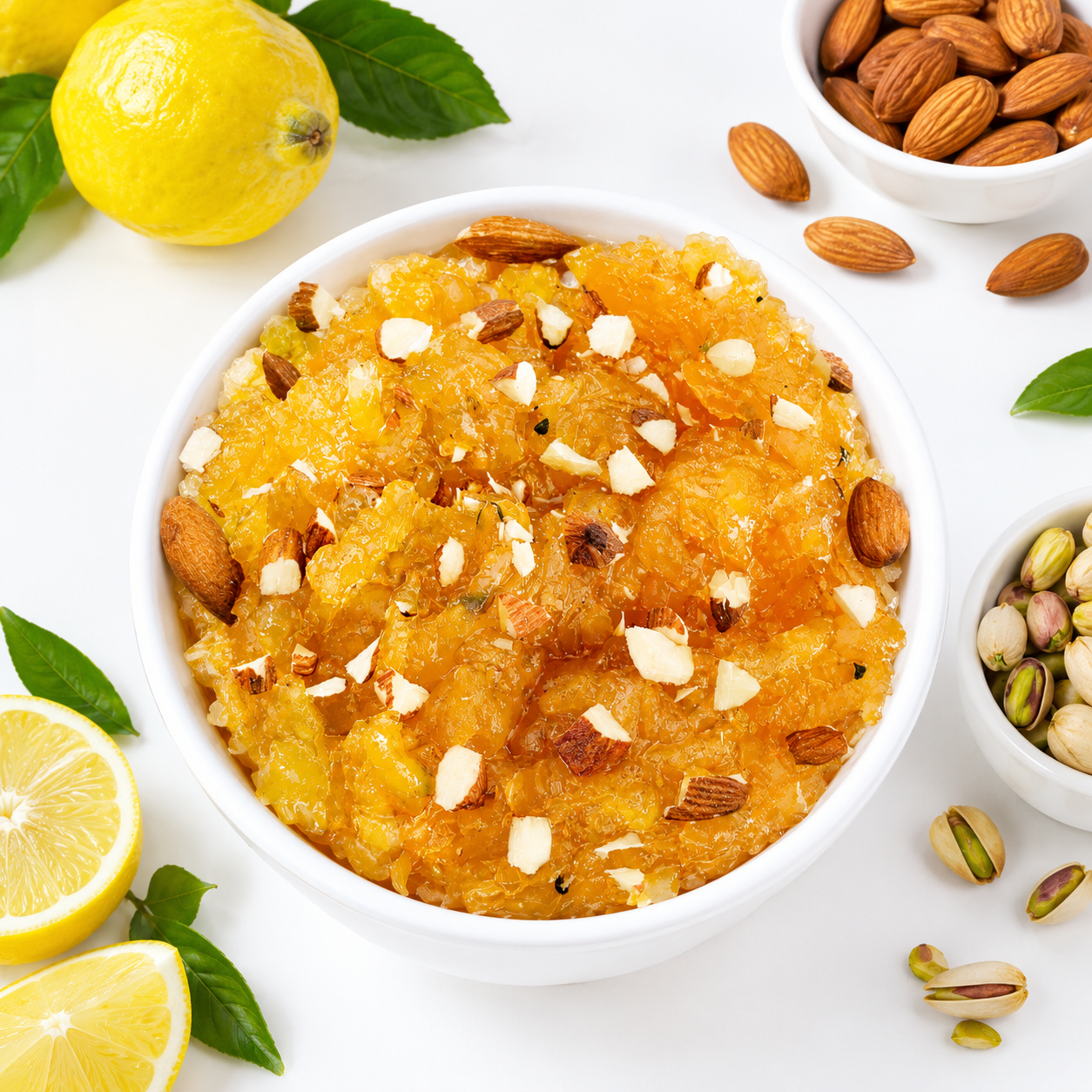
Safarjal (Quince) Murabba: Benefits, Taste & Where to Buy in Pakistan
When people think of Shikarpuri food, they usually think of spicy achar. But there is a sweeter side to the tradition, and safarjal murabba is its star. Golden, fragrant and slow-cooked in syrup, it has been a winter favourite in Pakistani homes for generations. Here is everything you need to know about it.
What Is Safarjal?
Safarjal is the Urdu name for quince, a hard, yellow, fragrant fruit that is also called behi in Sindhi and Punjabi. Raw quince is too firm and tart to eat comfortably, so it is traditionally cooked slowly. That slow cooking turns it soft, sweet and a beautiful amber colour.
What Is Safarjal Murabba?
Murabba is a fruit preserve made by cooking fruit gently in sugar syrup until it absorbs the sweetness and becomes tender. Safarjal murabba has a distinctive floral aroma, a soft texture and a balanced sweet-tart taste that you will not find in jam.
Murabba is a close cousin of achar in the Pakistani kitchen: both are about preserving seasonal produce. Where achar is salty, spicy and oily, murabba is sweet, syrupy and mild.
The Shikar pur Connection
Shikar pur is known not only for pickles but also for its preserves, chutneys and murabbas. Families here have long prepared seasonal fruit in small batches, using recipes passed down at home. That is why people often search for “Shikarpuri” when they want murabba and achar that taste homemade rather than factory-made.
How Safarjal Murabba Is Traditionally Made
- Selecting ripe quince: firm, yellow fruit with a strong fragrance.
- Peeling and cutting: the fruit is peeled, cored and cut into pieces.
- Pricking or soaking: helps the fruit absorb syrup evenly.
- Boiling gently: the pieces are softened in water first.
- Sugar syrup cooking: simmered slowly until the syrup thickens and the fruit turns amber.
- Flavouring: many recipes add cardamom or a pinch of other whole spices.
- Resting and jarring: the murabba cools and is packed into clean, dry jars.
How to Enjoy Safarjal Murabba
- With paratha or roti for a sweet breakfast
- On toast or bread instead of jam
- Alongside plain rice or khichdi as a sweet and savoury contrast
- As a dessert topping on kheer, custard or ice cream
- Served to guests as a traditional treat
What About Health Benefits?
Quince has long been valued in traditional food culture, and many families enjoy murabba as a seasonal treat. But murabba is made with a good amount of sugar, so it is best eaten in small portions. If you have diabetes or any health condition, check with your doctor before adding it to your routine. Treat it as a delicious tradition rather than a medicine.
Order Premium Murabbas From Premium Pickle
Safarjal murabba is proof that Shikarpuri food is not only about spice. It is slow, patient and full of tradition. Whether you enjoy it with paratha or serve it to guests, a good jar brings a bit of heritage to the table.
Want to taste tradition? Explore Premium Pickle and order your favourite achar and murabba today.